רמי אלוןRAMI ALON עברית
Givatayim Theatre Gallery

Mosaic Muse

מ ו ז ה   ב פ ס י פ ס

1 Sep – 25 Oct 2026

Dates
1 Sep – 25 Oct 2026
Opening
Opening: Monday, 14 September 2026, 18:30
Venue
Givatayim Theatre Gallery, 1 Lea König St., Givatayim
Curator
Curator: Doron Polak
Admission
Free admission
Hours
Opening hours: Sun–Thu 10:00–17:00, and whenever performances are held at the theatre — including Fridays and Saturdays

On the Exhibition

Curator: Doron Polak

Rami Alon takes the great Western painting and breaks it into stone. Klimt, van Gogh, Munch, Kusama — all pass through the hands of a Jerusalem building contractor who learned to chisel stone before he learned to paint. What emerges is not a copy. Mosaic refuses the softness of the brush: it breaks the image into hard, separate units and forces the eye to reassemble it from a distance. In this exhibition — sixty works — Kadishman's flock, Klimt's gold and Kusama's pumpkins meet under one discipline of stone.
The Full Curator’s Essay Doron Polak, September 2026 · On Rami Alon, on stone, and on millennia of mosaic

Rami Alon · Thoughts on the Creative Muse of His Mosaic

Rami Alon is a man full of positive energy. The perpetual smile on his face gives him away as an empathetic, affirming, creative person — one whom art captured when he became a pensioner, and which took hold of him in an unbelievable surge.

A former stonemason, he is entrusted with the secrets of making: a man who knows and honours the properties of stone.

“Mosaic has a history thousands of years old.” So writes Linda Kniffitz — curator of the International Centre for Mosaic Documentation in Ravenna — in the essay she devoted to the first Mosaic Biennale in Netanya, and she continues: “It began in Ur, the city of Abraham, and went on existing and developing as an art of all the great monotheistic religions. Today mosaic is experiencing a renaissance, rising anew onto the stage of history as a contemporary language, open to experiment and to hybridisation.”

And indeed the first mosaics appeared in Mesopotamia in the third millennium BCE, made of clay cones and river pebbles. In ancient Greece mosaics concentrated on scenes from mythology and on geometric forms. The Roman Empire perfected mosaic into magnificent floor paintings in monumental public buildings. In the Byzantine period, through the fourth to the fifteenth centuries, mosaic moved to walls and ceilings, all in order to glorify religion. Classical Islam, which like Judaism refrained from depicting the human figure, adopted mosaic for calligraphy and for complex geometric designs such as the arabesque. From the Renaissance to the modern era mosaic did not develop, and regained its force only in the twentieth century. Leading artists such as Gaudí, Klimt and Miró made admired mosaic works, treating the ancient medium as a material of personal expression.

Rami Alon creates, with a captivating naivety, empathetic works rich in colour — works that do the heart good in those who look at them. The series of plants and flowers, like the biblical and mythic scenes, receive from Rami Alon a personal translation of his own. It is hard to remain indifferent before works so rich in material: in ceramic, in glass, and in the setting of chosen stones.

Rami’s homage works to the classical, mythic artists make him singular in the local field, and earn him a particular respect among those artists who maintain an ongoing dialogue with the masters of the art world.

Rami Alon does not reproduce the works exactly. He always allows them — by virtue of his creative skills — to reach his own heart and the personal imagination of the viewer. He makes his mosaics with originality, with skill, and with an individual regard that commands respect.

In the introduction to “The Mosaic Code”, an exhibition I curated in Netanya with Esti Drori, we raised the question: what is the secret of the power and the enchantment of mosaic? What is the code that turns a laborious technique into contemporary art? We wrote then that a partial answer lies in the words of J. Robert Oppenheimer: “Both of them — people of art and people of science — live always at the edge of mystery, wholly surrounded by it; and that is the measure of their creation. At every time they have been engaged in harmonising the new and the familiar, in balancing novelty against synthesis, in imposing order, partial at least, upon the general chaos.” Just like Rami Alon, all mosaic artists make use of a code built from a system of meticulous rules and laws, which each of them set or chose for himself, translated into the new language they developed in order to present, to raise and to provoke the questions on the agenda of art.

Rami Alon makes homage to artists of renown throughout history, in Israel and abroad. First he is in dialogue with the known creators of mosaic in Jerusalem, his own city — Mordechai Gumpel, David Sharir and Perli Pelzig — who set the mosaics they made in Jerusalem stone, engaging among other things with biblical and local motifs.

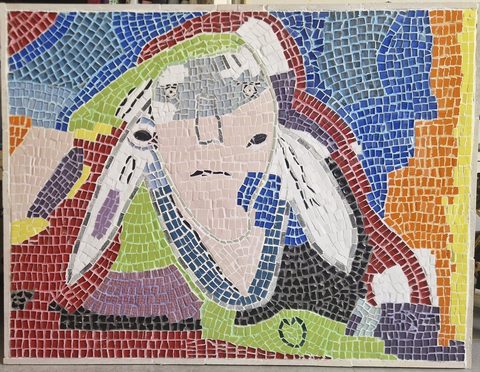
In all the works he makes in dialogue with the masters of the art world he takes the painting and dismantles it — creating a renewed three-dimensional image and reassembling it in a personal colour, translated into the colours of this place. With Klimt, himself influenced by gilded Byzantine mosaic, he holds a dramatic conversation: to a work without perspectival depth he grants a personal translation founded on Klimt’s own decorative patterns. Alon uses angular cuts for ground and for garment; with his mason’s skill he employs a dense, deliberate setting of the stones, through which he gives new character to body and to face. When he shapes his dialogue with the Japanese artist Kusama, who makes an infinite repetition arising from a flowing psychic experience, he translates it into mosaic with a laborious energy of his own — measured, slow and enchanted.

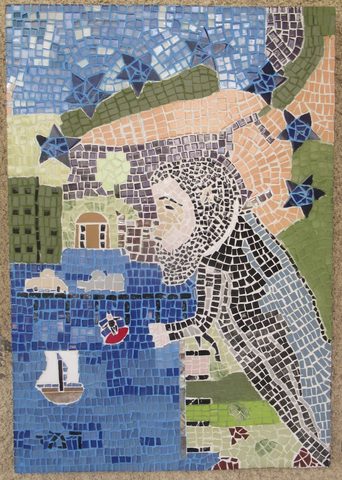
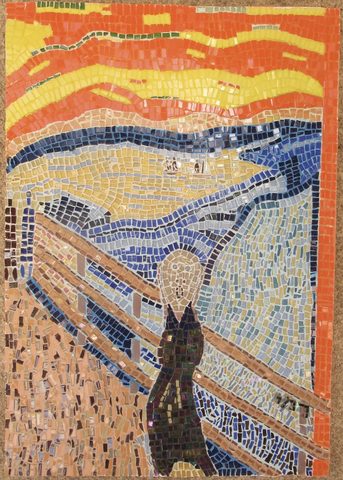
The same holds for Rami Alon’s personal translation of “The Scream” by Edvard Munch: dismantling the painting and building it anew grants it a strong intensity, with theatrical meanings. Special mention is due to Rami’s dialogue with the painter van Gogh. In the meeting between them there are other, particular shades of touch, of materiality and of time. Van Gogh’s slightly sculptural placements of paint are translated by Rami Alon into joinings of stone, shards of glass and physical stone movements whose volume creates a three-dimensional depth. All these mosaics, which hold a dialogue with the heroes of the history of art, stir storms of feeling in the eyes of those who look, and disclose a new romantic interpretation through renewed contemplation of them.

Doron Polak · Curator, “Mosaic Muse”

Quotations translated from the Hebrew.

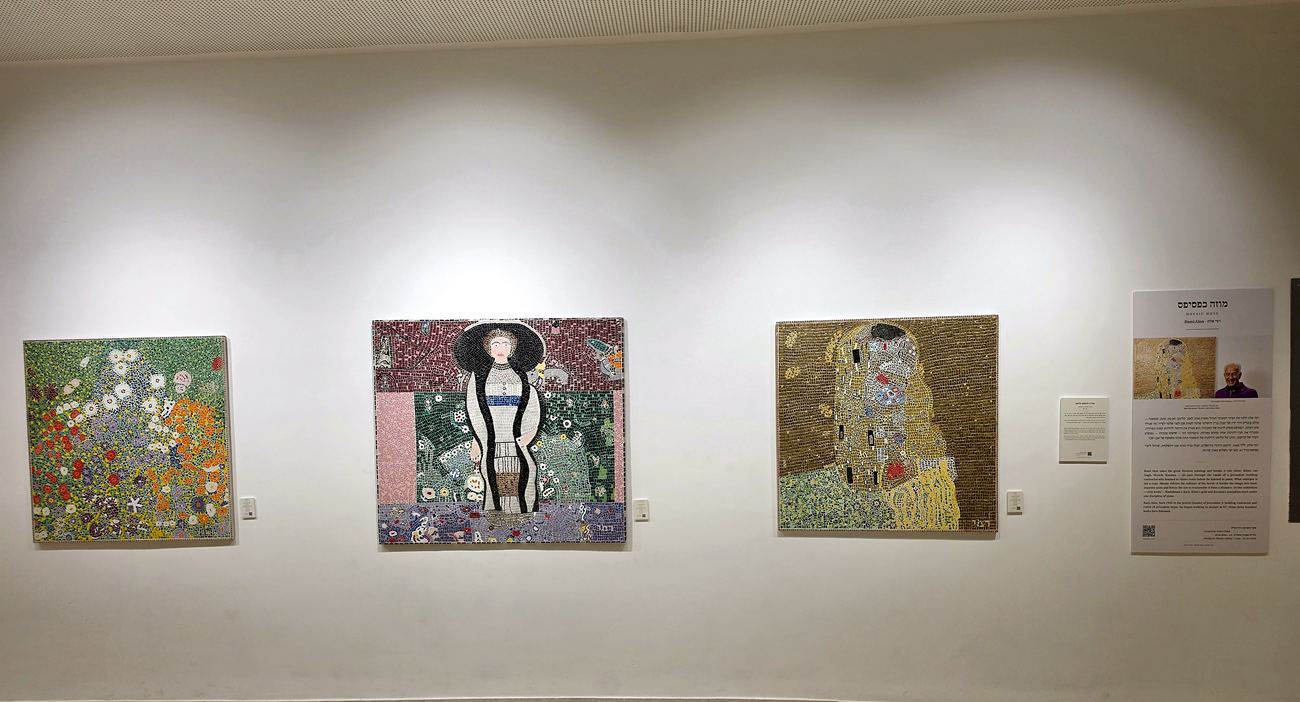
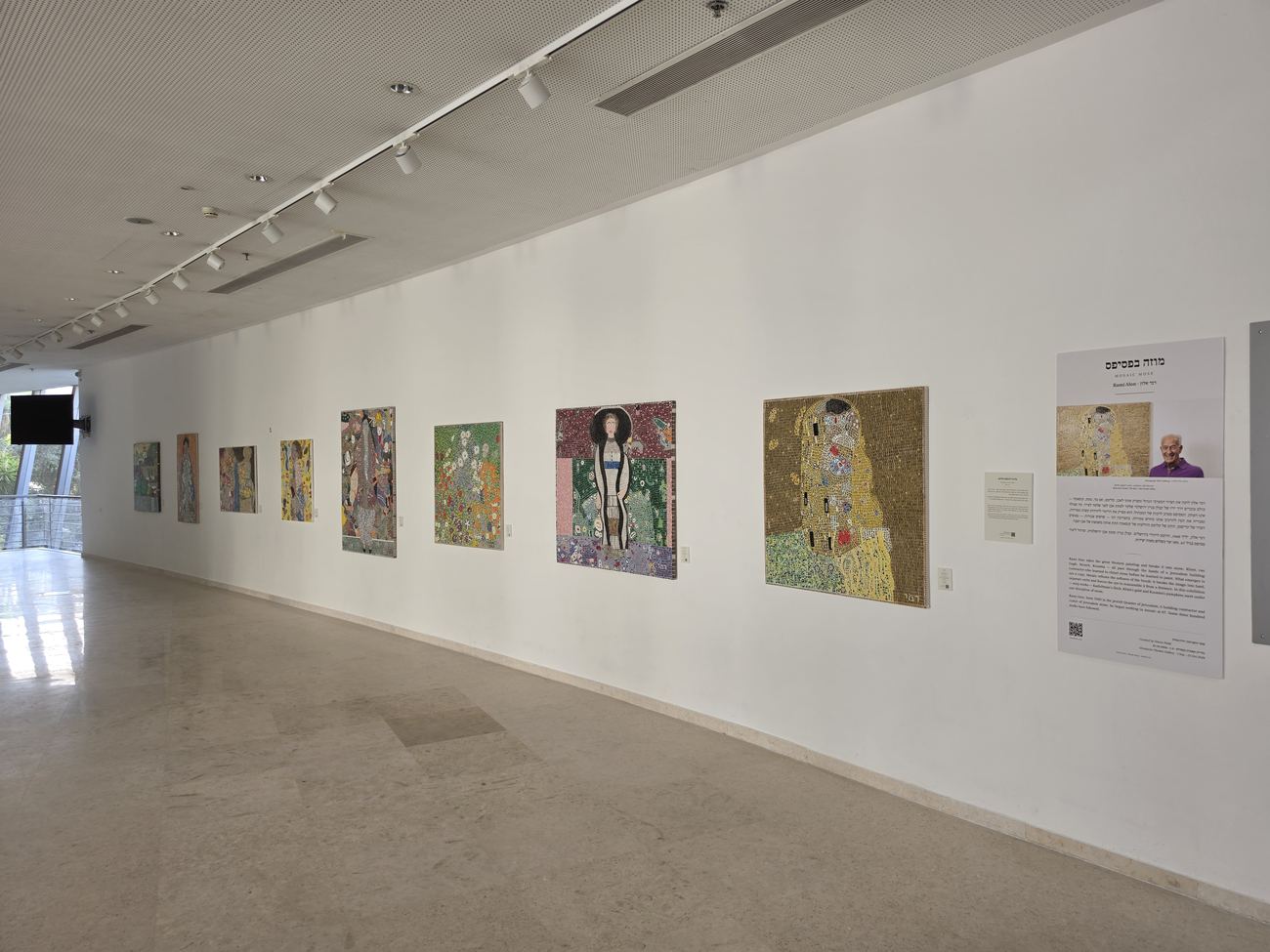
The curving wall, the Klimt homages receding towards the curator’s panel
Seventy-five seconds from hanging day, 31 August 2026: sixty mosaics come down from the walls of the house, travel to the gallery and go up on its walls.

Original Compositions (5)

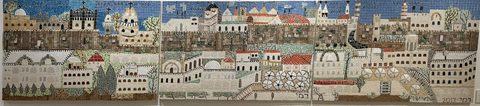
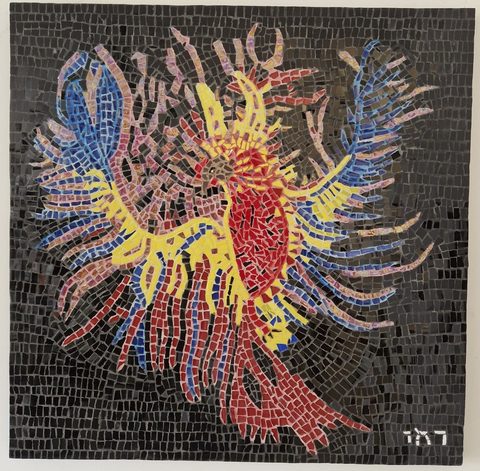
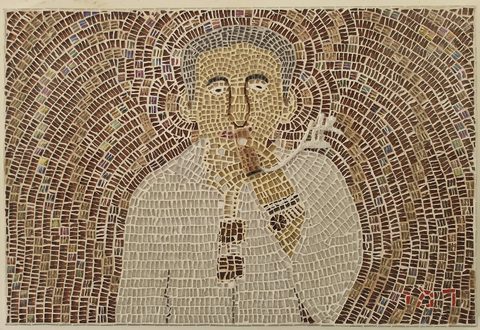
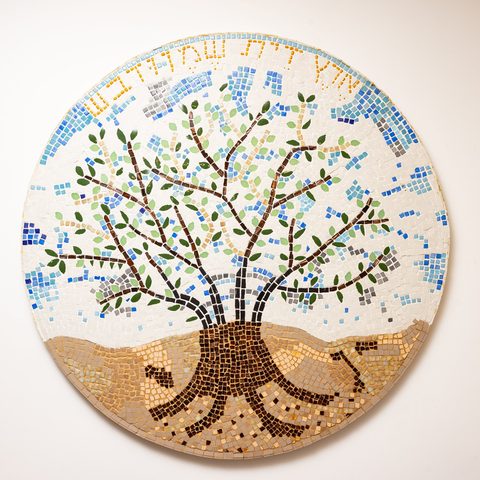
Not everything here is an homage. These five works are Rami Alon's alone — the Jerusalem he was born in, an olive tree, a phoenix, a self-portrait.

They look different from the rest, and not by accident: with no source painting to dictate the composition, the stone decides for itself where to go.

Homage to Gustav Klimt (8)

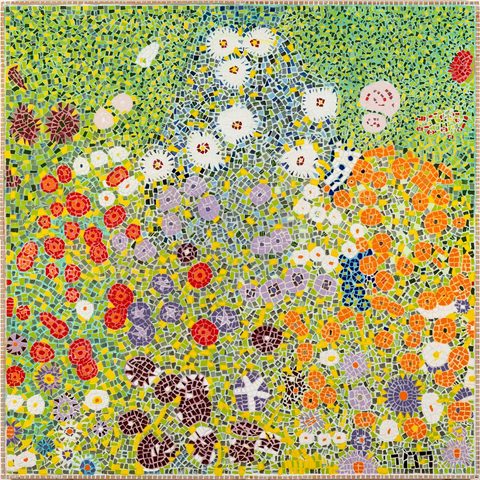
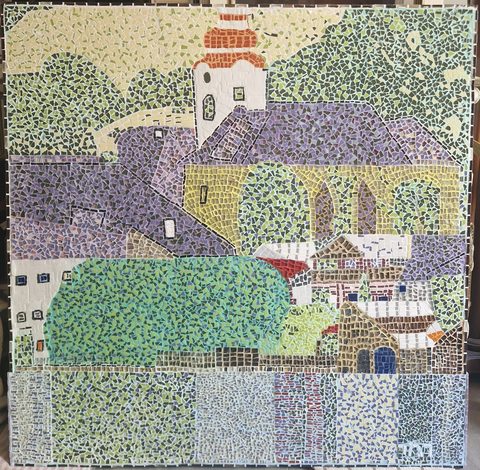
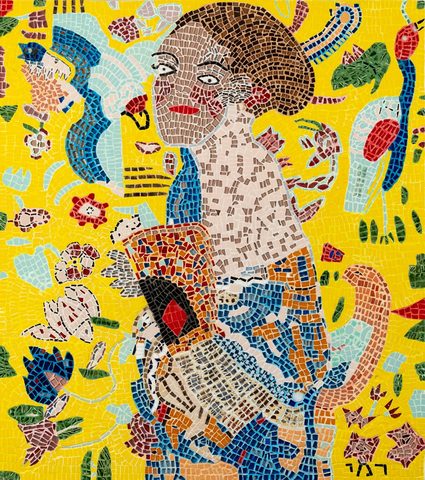
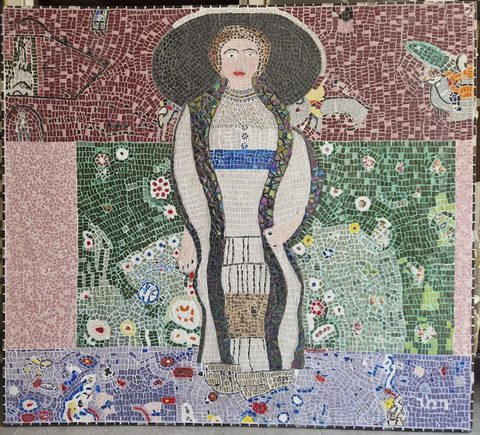
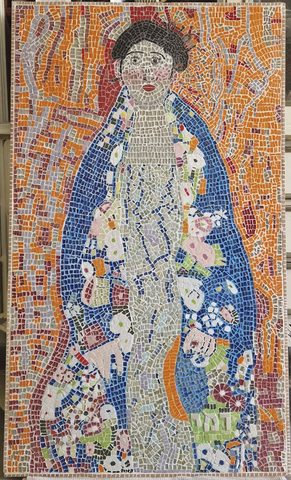
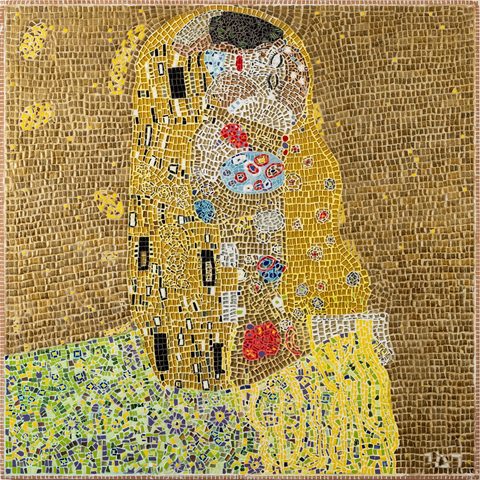
Klimt covered his paintings in gold leaf, and so long as the surface stays flat the gold glows but stays still. In mosaic it is no longer flat. Every stone sits at a slightly different angle, so the light breaks differently on each. The image changes as you move past it.

This may be why Rami Alon returns to Klimt more than to any other artist: mosaic does for gold what painting cannot. Eight works, among them The Kiss — some hundred and twenty thousand stones between them.

Homage to Vincent van Gogh (5)

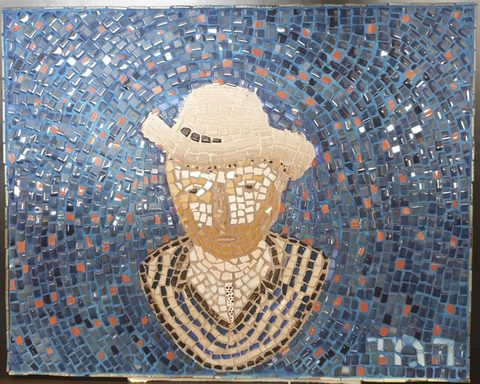
In van Gogh the brushstroke is the subject. Paint sits thick on the canvas, almost sculptural, and you can read the speed of the hand in every centimetre.

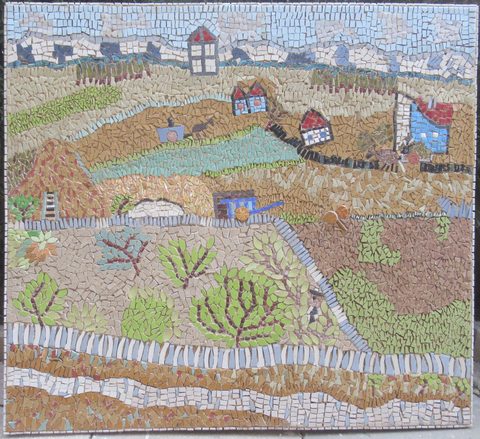
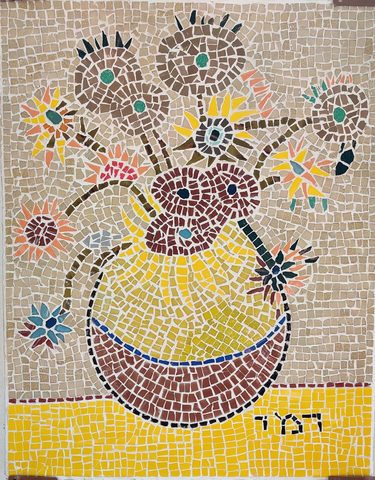
Stone cannot run. It is laid, not brushed. So the turbulent stroke becomes a sequence of separate units, each deciding for itself how to return the light. Five works — from the fields of La Crau to the sunflowers.

Homage to Menashe Kadishman (19)

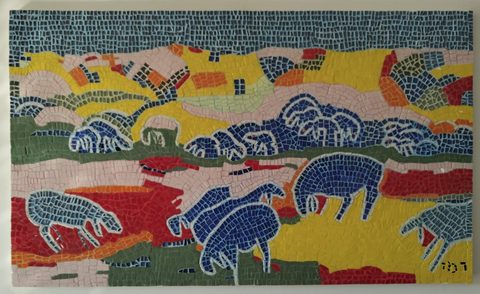
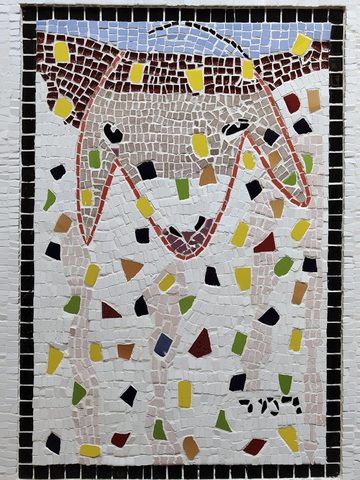
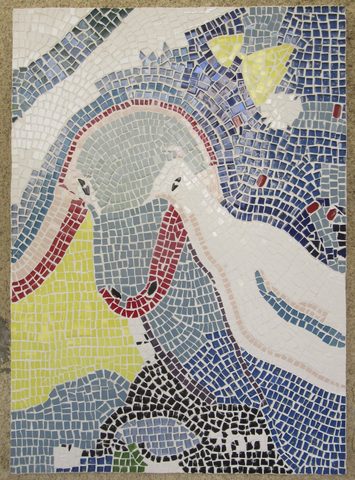
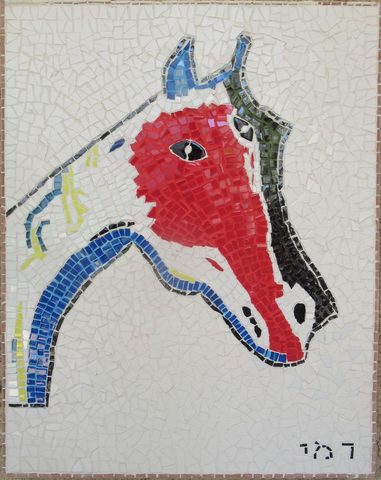
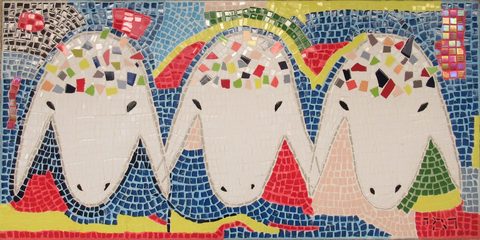
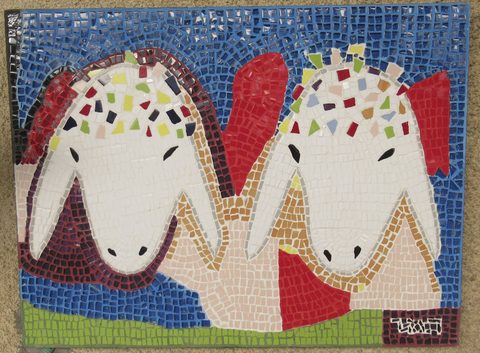
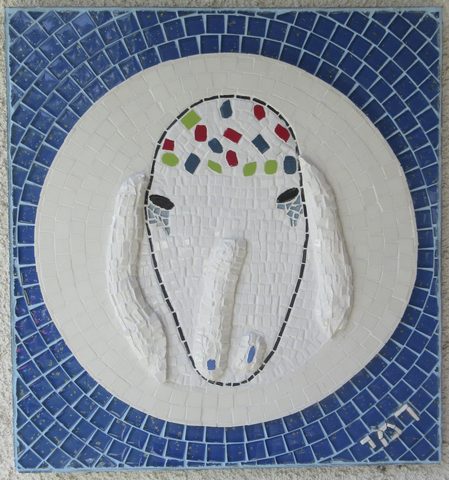
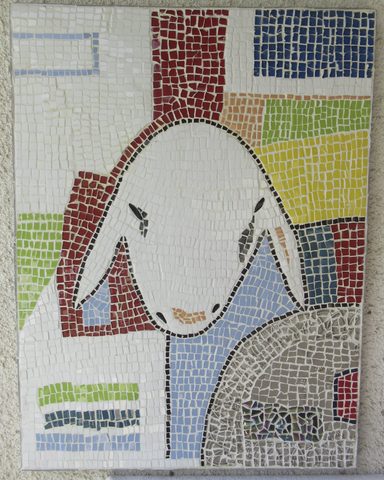
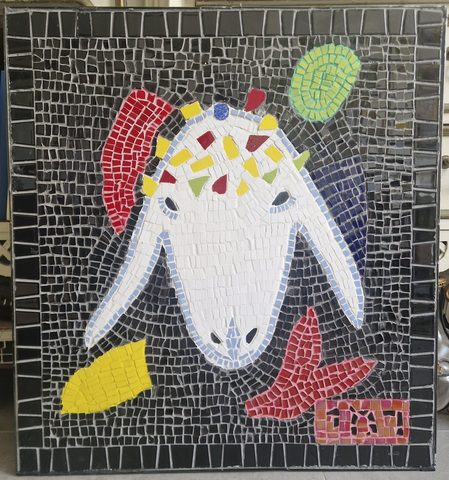
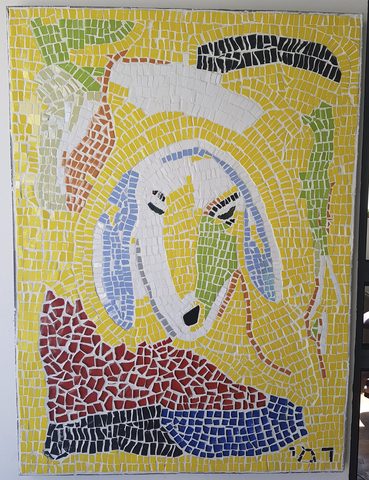
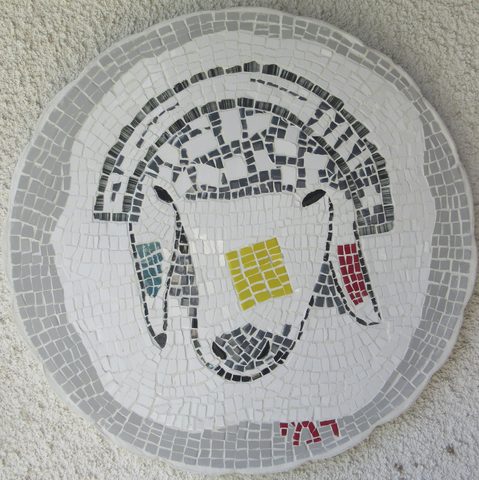
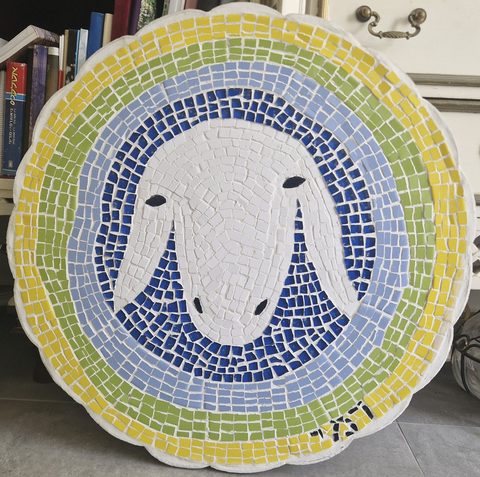
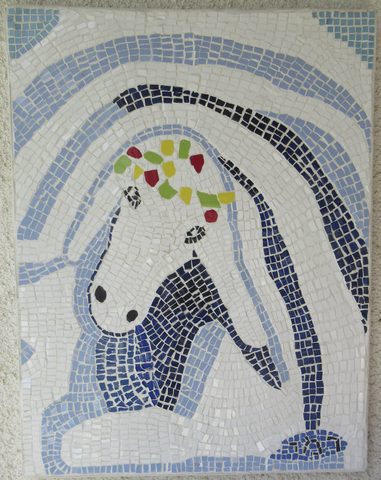
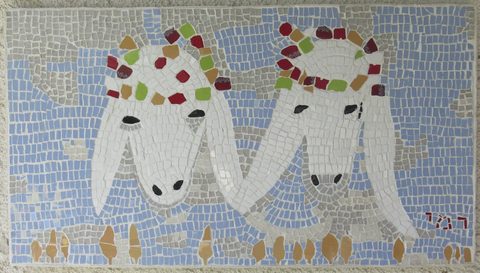
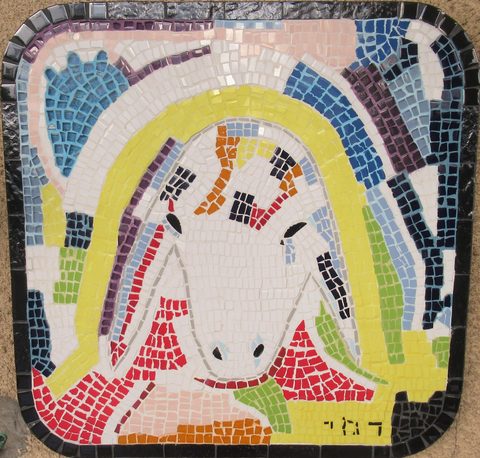
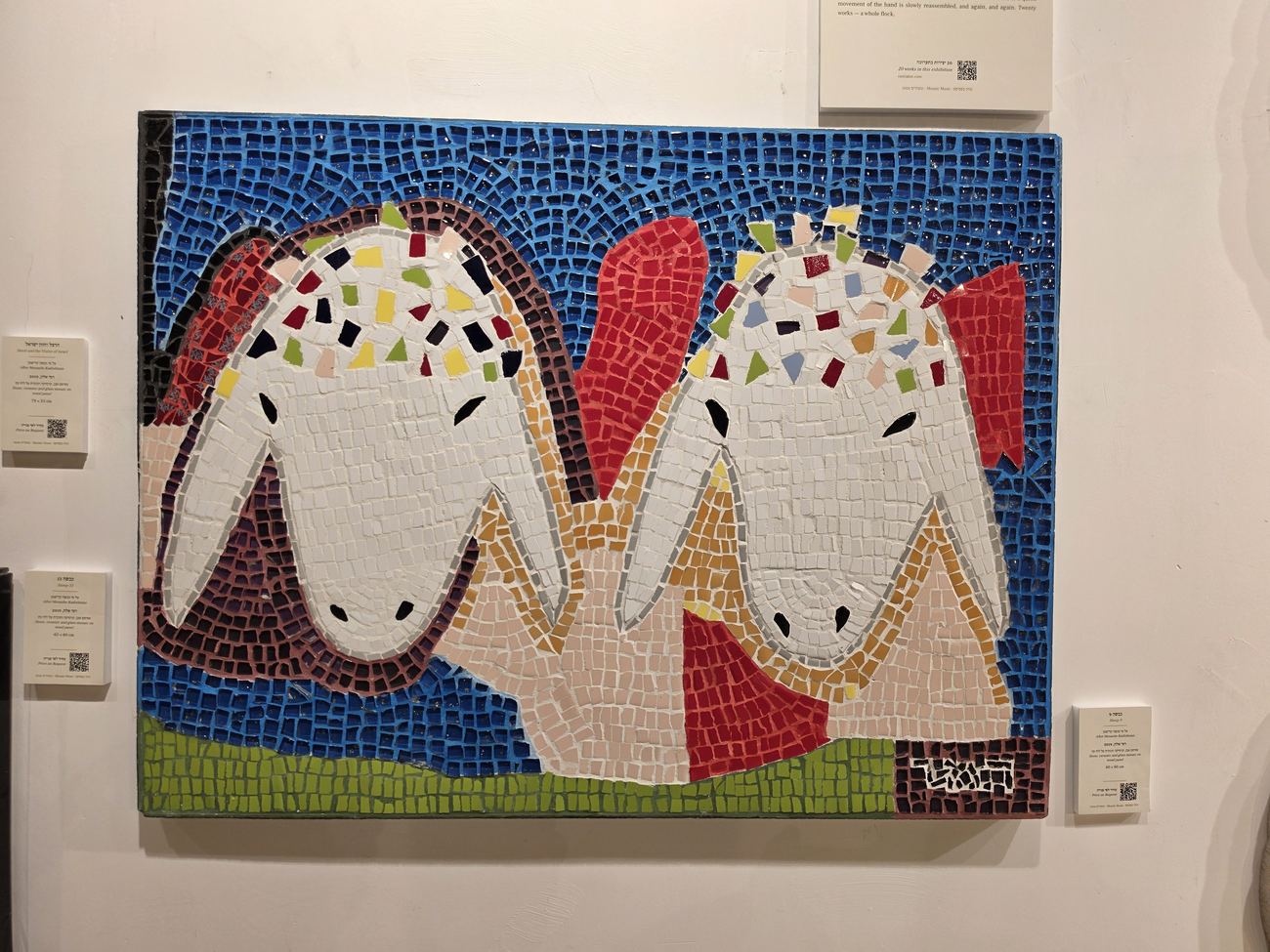
Kadishman's sheep may be the single most recognisable image in Israeli art — a face that is also an animal, also a victim, also a portrait. He painted it thousands of times, fast and with a wide brush, as if testing how often one thing can be repeated without being lost.

Rami Alon does the exact opposite. What Kadishman made in a second is rebuilt here from thousands of stones laid one by one. A face born of a quick movement of the hand is slowly reassembled, and again, and again. Twenty works — a whole flock.

Homage to Yayoi Kusama (3)

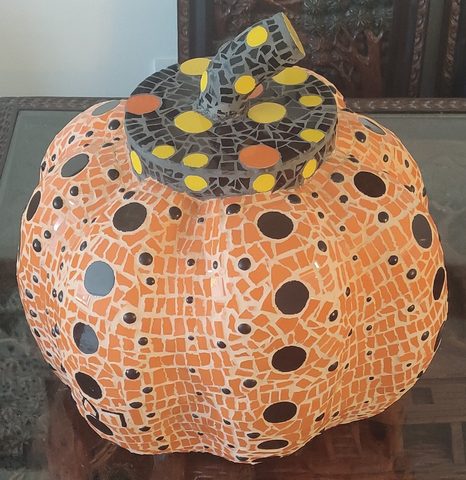
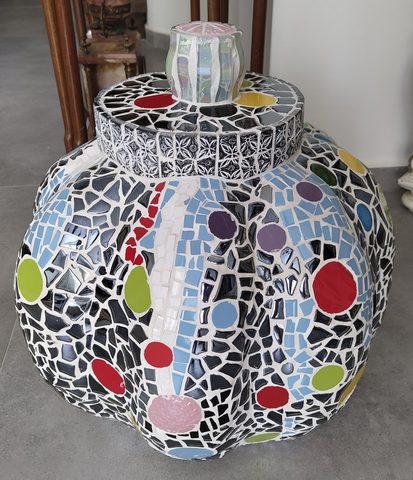
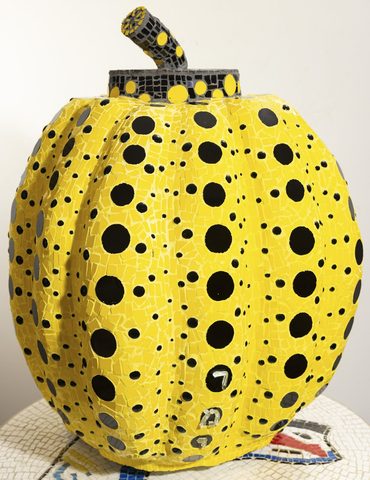
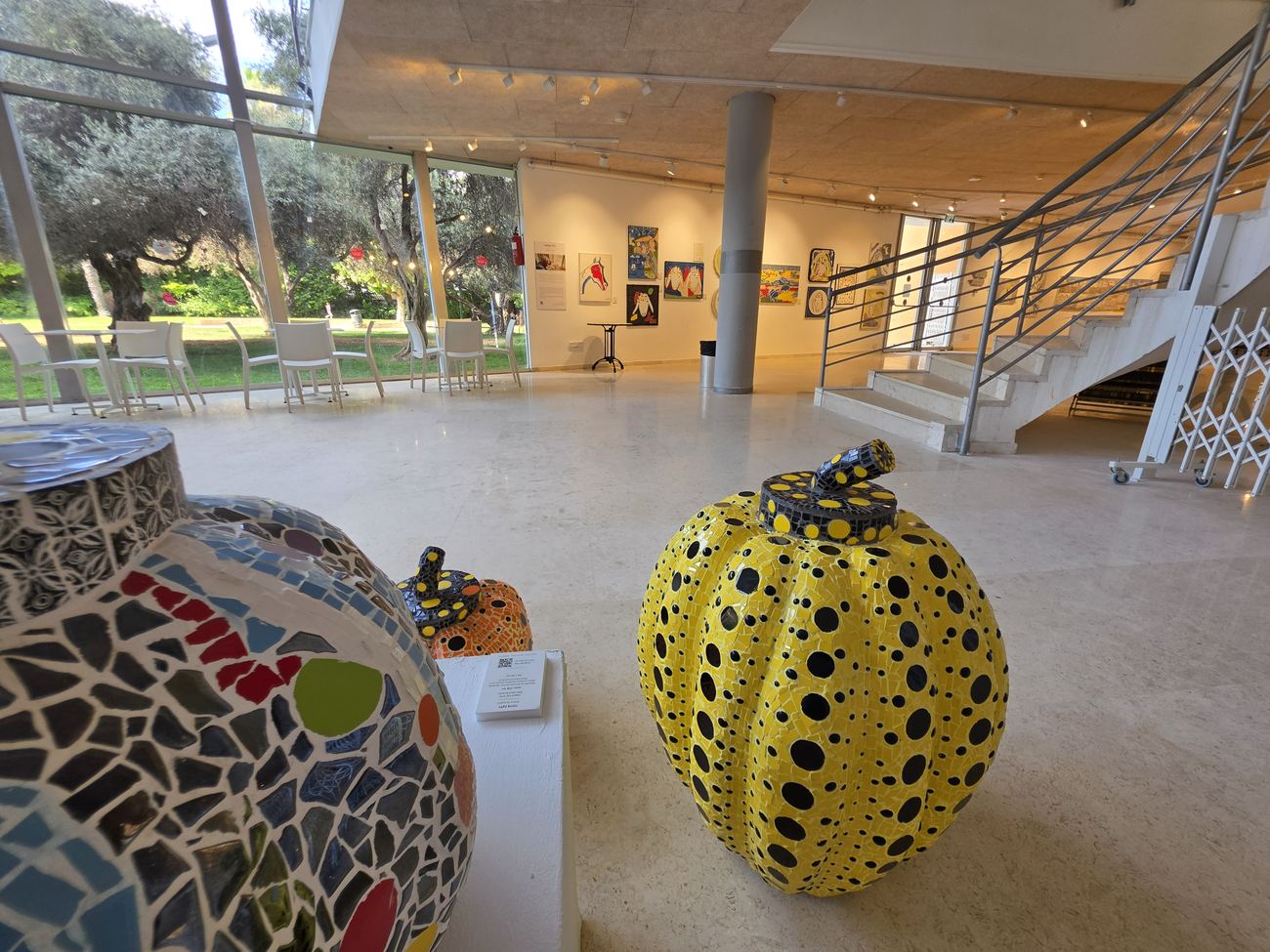
Kusama covers the world in dots. Her pumpkin is not a still life but an image repeated until repetition becomes law.

Mosaic is made of dots by nature. Every stone is a dot, and the only difference between the pumpkin and the ground is which colour was set where. Three pumpkins.

Homage to Amedeo Modigliani (2)

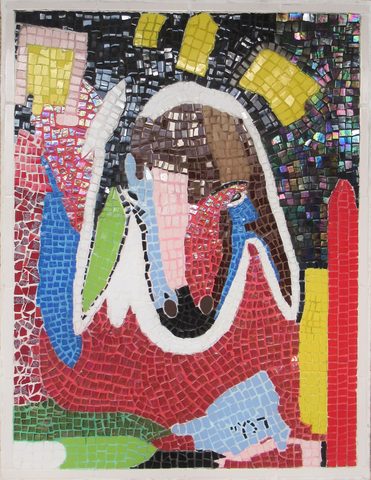
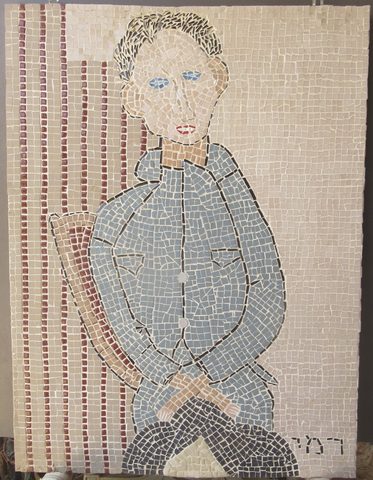
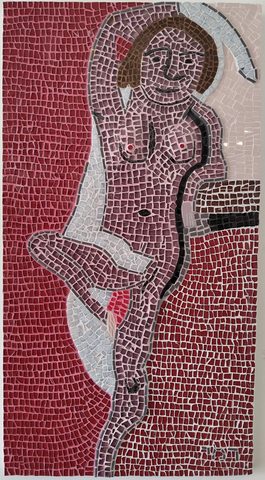
Modigliani was a sculptor before he was a painter, and his elongated faces are carved faces. The two works here are on the two sides of a single wood panel — Boy in a Blue Jacket on one, Female Nude on the other. One panel, two works.

Homage to Edvard Munch (2)

In Munch the line flows — sky, water and face are pulled by the same dizzying movement. Mosaic does not flow. The scream is built from hard stones that cannot bend, and the tension comes precisely from that contradiction. Two works.

Homage to Henri Matisse (2)

Matisse wanted flat, clean colour with no shading. In his last years he cut painted paper and assembled figures from the pieces — almost a mosaic.

Here the cut-out returns to hard material. Two works.

Homage to Marc Chagall (2)

Chagall worked in mosaic and stained glass no less than in paint — in Israel he left the Knesset wall painting and the Hadassah windows. He knew that light passing through material, or breaking off it, is not the light that comes off a brush.

So the homage here is a double one: to the image, and to the material he chose himself. Two works.

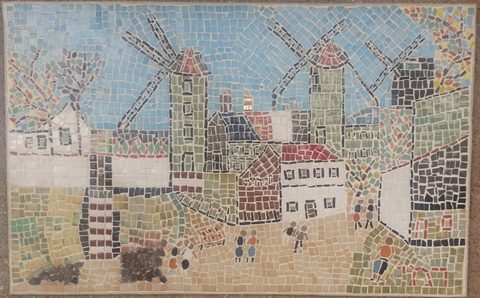
Homage to Maurice Utrillo (2)

Utrillo painted Montmartre again and again — walls, fences, windmills. He mixed plaster into his paint so that a painted wall would be as material as a real one.

Mosaic finishes that sentence: the wall is at last made of stone. Two works.

60 works in Mosaic Muse
All works are for sale
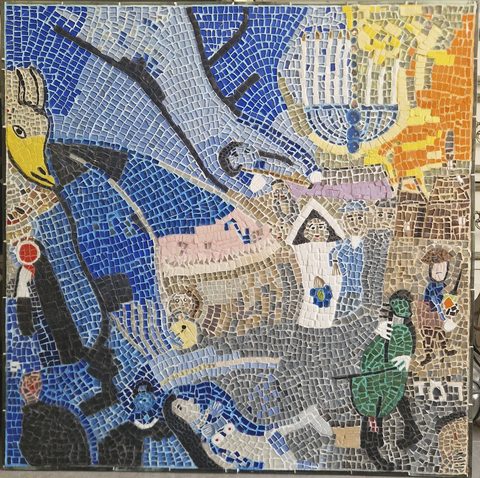
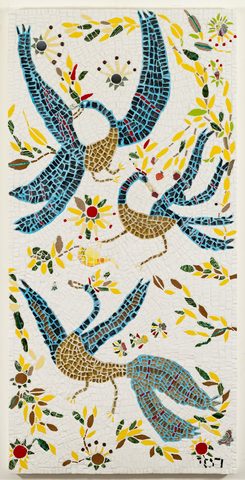
Dance of Wings

Dance of Wings

Original composition · 2017
Price on Request
Jerusalem (Triptych)

Jerusalem (Triptych)

Original composition · 2013
Price on Request
Phoenix

Phoenix

Original composition · 2023
Price on Request
Self Portrait

Self Portrait

Original composition · 2024
Price on Request
The Olive Tree

The Olive Tree

Original composition · 2010
Price on Request
Bauerngarten

Bauerngarten

After Gustav Klimt · 2024
Price on Request
Church in Unterach on the Attersee

Church in Unterach on the Attersee

After Gustav Klimt · 2026
Price on Request
Lady with a Fan

Lady with a Fan

After Gustav Klimt · 2024
Price on Request
Portrait of Adele Bloch-Bauer II

Portrait of Adele Bloch-Bauer II

After Gustav Klimt · 2026
Price on Request
Portrait of Fraulein Lieser

Portrait of Fraulein Lieser

After Gustav Klimt · 2025
Price on Request
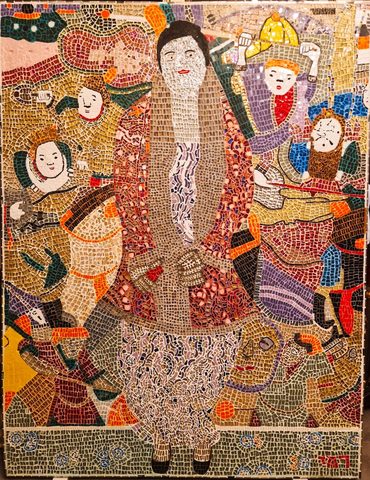
Portrait of Friedericke Maria Beer

Portrait of Friedericke Maria Beer

After Gustav Klimt · 2025
Price on Request
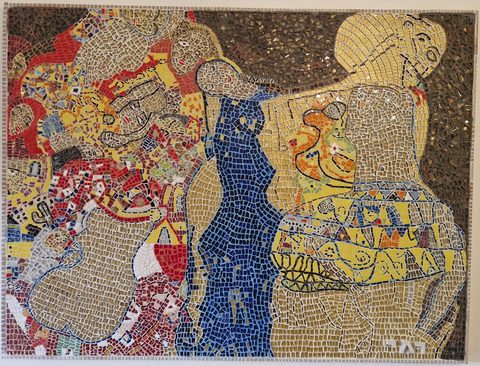
The Bride

The Bride

After Gustav Klimt · 2025
Price on Request
The Kiss

The Kiss

After Gustav Klimt · 2024
Price on Request
Harvest at La Crau with Montmajour in the Background
Harvest at La Crau with Montmajour in the Background

After Vincent van Gogh · 2016
Price on Request
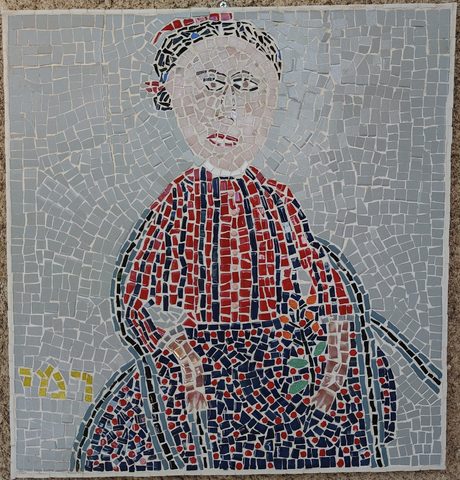
La Mousmé

La Mousmé

After Vincent van Gogh · 2012
Price on Request
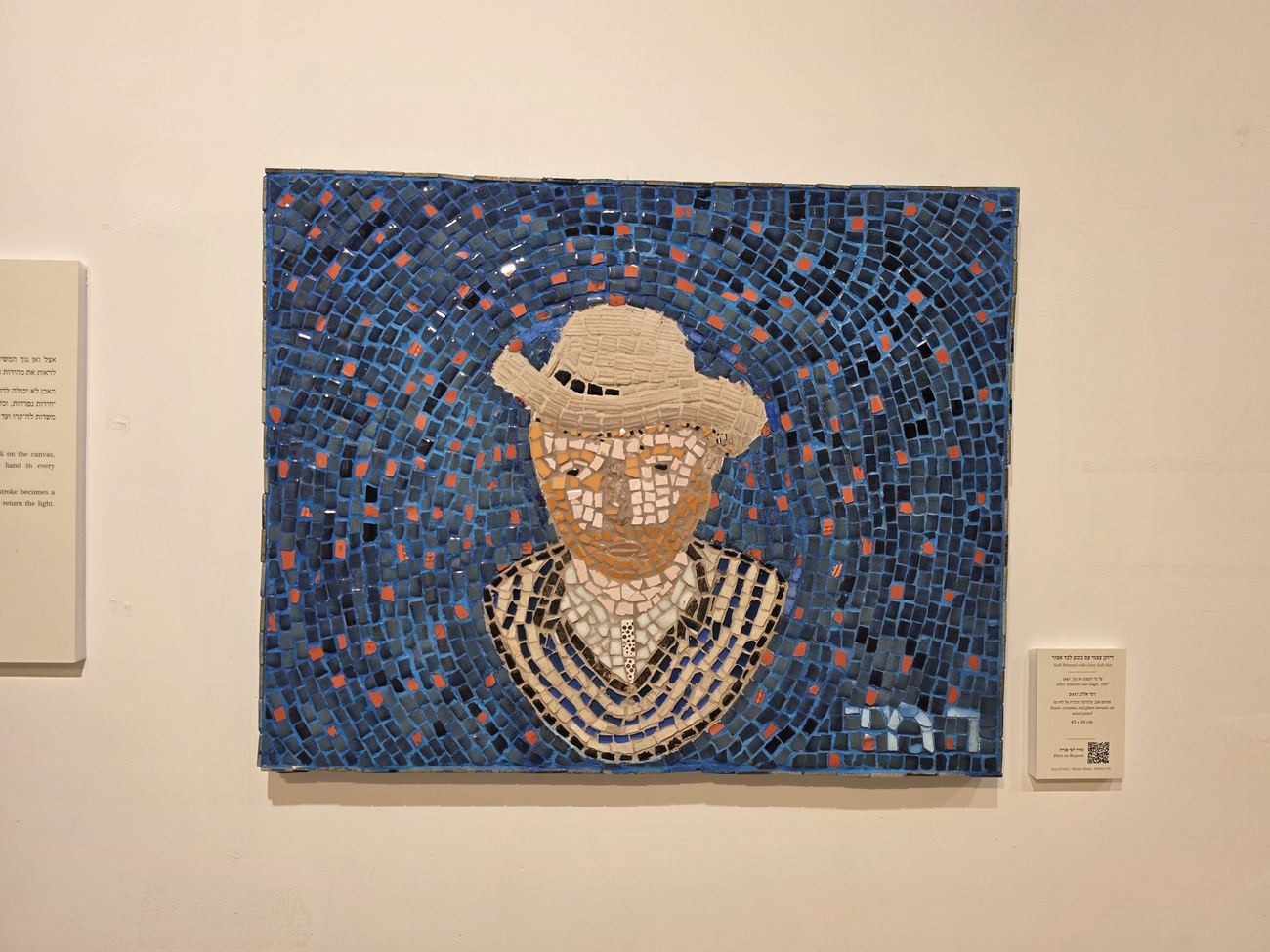
Self-Portrait with Grey Felt Hat

Self-Portrait with Grey Felt Hat

After Vincent van Gogh · 2017
Sold
Still Life: Vase with Twelve Sunflowers
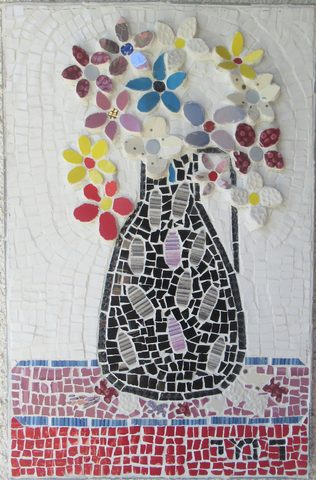
Still Life: Vase with Twelve Sunflowers

After Vincent van Gogh · 2015
Price on Request
Vase with Chinese Asters and Gladioli
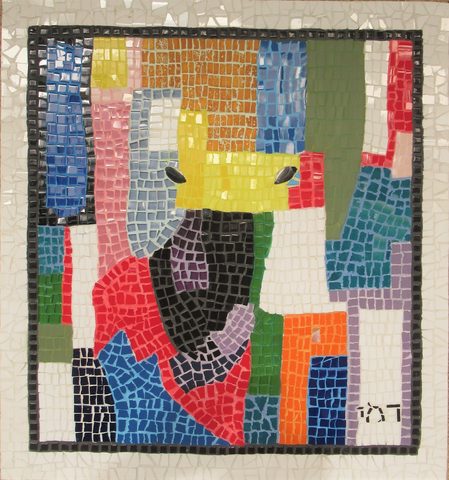
Vase with Chinese Asters and Gladioli

After Vincent van Gogh · 2018
Price on Request
Sheep 1

Sheep 1

After Menashe Kadishman · 2019
Price on Request
Sheep 2

Sheep 2

After Menashe Kadishman · 2019
Price on Request
Sheep Grazing in a Field

Sheep Grazing in a Field

After Menashe Kadishman · 2019
Price on Request
Sheep 4

Sheep 4

After Menashe Kadishman · 2019
Price on Request
Herzl and the Vision of Israel

Herzl and the Vision of Israel

After Menashe Kadishman · 2019
Price on Request
Sheep 6

Sheep 6

After Menashe Kadishman · 2019
Price on Request
Horse

Horse

After Menashe Kadishman · 2019
Price on Request
Sheep 8

Sheep 8

After Menashe Kadishman · 2019
Price on Request
Sheep 9

Sheep 9

After Menashe Kadishman · 2019
Price on Request
Sheep 10

Sheep 10

After Menashe Kadishman · 2019
Price on Request
Sheep 12

Sheep 12

After Menashe Kadishman · 2019
Price on Request
Sheep 13

Sheep 13

After Menashe Kadishman · 2019
Sold
Sheep 14

Sheep 14

After Menashe Kadishman · 2019
Price on Request
Sheep 15

Sheep 15

After Menashe Kadishman · 2019
Price on Request
Sheep 20

Sheep 20

After Menashe Kadishman · 2020
Price on Request
Sheep 16

Sheep 16

After Menashe Kadishman · 2020
Price on Request
Sheep 17

Sheep 17

After Menashe Kadishman · 2020
Price on Request
Sheep 18

Sheep 18

After Menashe Kadishman · 2020
Price on Request
Sheep 19

Sheep 19

After Menashe Kadishman · 2020
Price on Request
Orange Pumpkin

Orange Pumpkin

After Yayoi Kusama · 2022
Sold
Pumpkin

Pumpkin

After Yayoi Kusama · 2022
Price on Request
Yellow Pumpkin

Yellow Pumpkin

After Yayoi Kusama · 2022
Price on Request
Boy in a Blue Jacket (reverse: Female Nude)
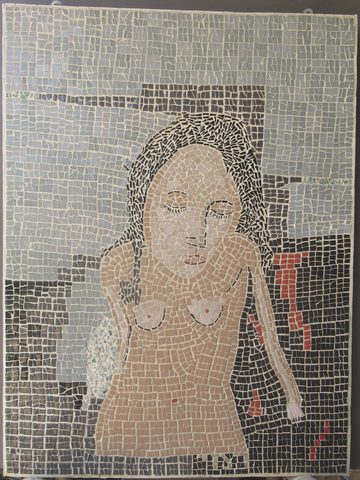
Boy in a Blue Jacket (reverse: Female Nude)

After Amedeo Modigliani · 2012
Price on Request
Female Nude (reverse: Boy in a Blue Jacket)
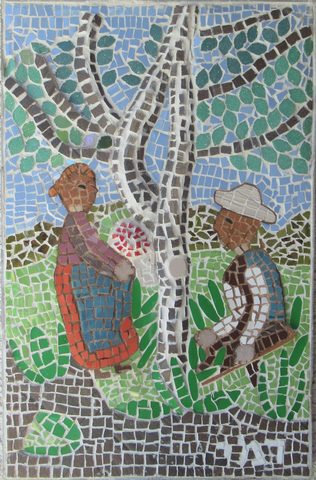
Female Nude (reverse: Boy in a Blue Jacket)

After Amedeo Modigliani · 2012
Price on Request
Fertility

Fertility

After Edvard Munch · 2018
Price on Request
The Scream

The Scream

After Edvard Munch · 2020
Price on Request
Nude with White Scarf

Nude with White Scarf

After Henri Matisse · 2023
Price on Request
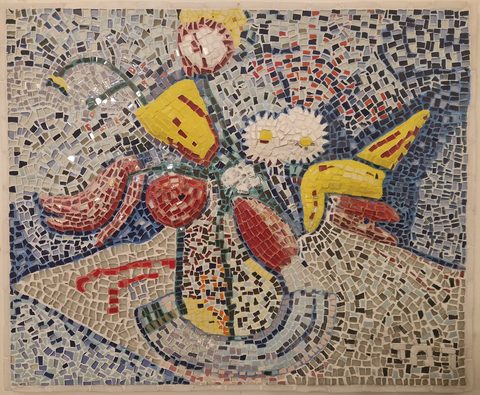
Parrot Tulips

Parrot Tulips

After Henri Matisse · 2025
Price on Request
Elements Inspired by the Knesset Wall Painting
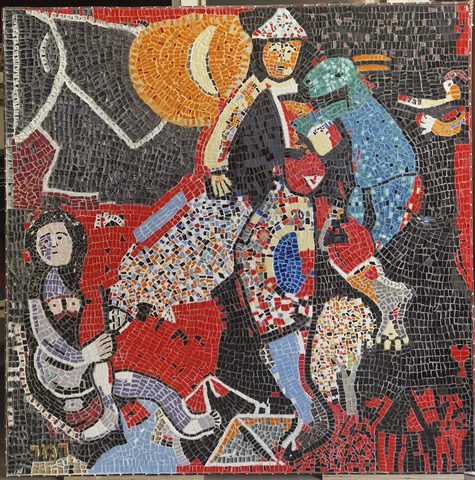
Elements Inspired by the Knesset Wall Painting

After Marc Chagall · 2025
Price on Request
Mauve Nude

Mauve Nude

After Marc Chagall · 2025
Price on Request
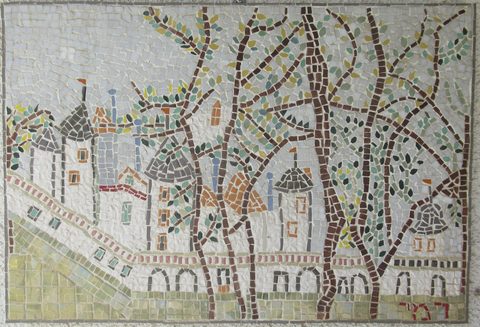
The Castle

The Castle

After Maurice Utrillo · 2012
Price on Request
Windmills of Montmartre

Windmills of Montmartre

After Maurice Utrillo · 2012
Price on Request
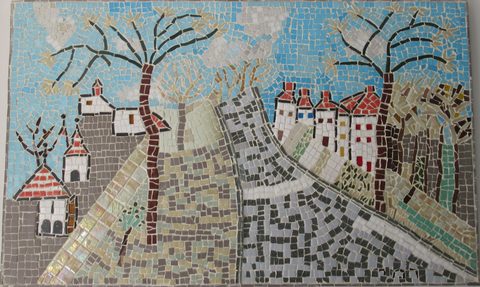
La route de Louveciennes

La route de Louveciennes

After Camille Pissarro · 2012
Price on Request
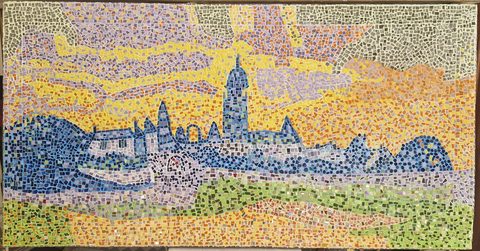
The Tower of Batz

The Tower of Batz

After Jean Metzinger · 2024
Price on Request
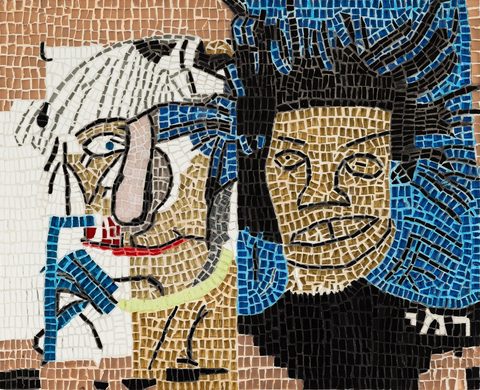
Dos Cabezas

Dos Cabezas

After Jean-Michel Basquiat · 2022
Price on Request
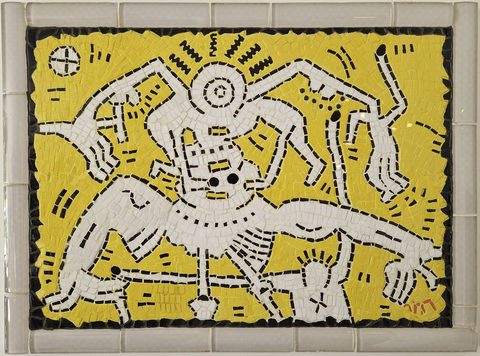
Untitled

Untitled

After Keith Haring · 2022
Price on Request
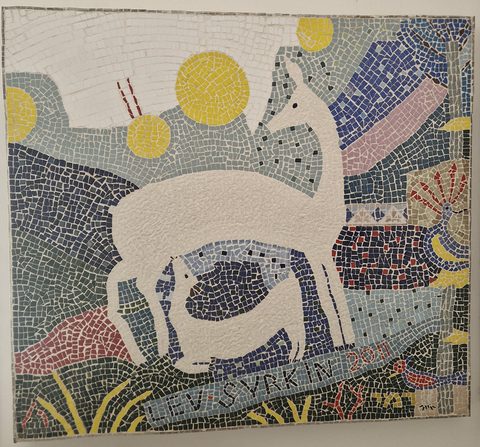
Mother Deer and Fawn

Mother Deer and Fawn

After Lev Syrkin · 2012
Price on Request
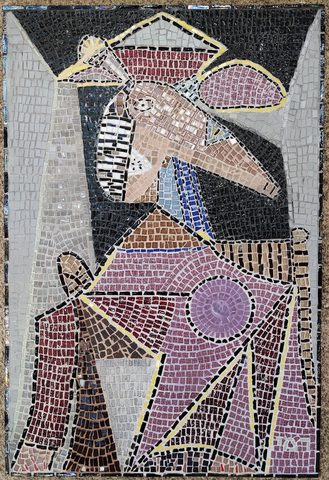
Portrait of a Woman

Portrait of a Woman

After Pablo Picasso · 2024
Price on Request
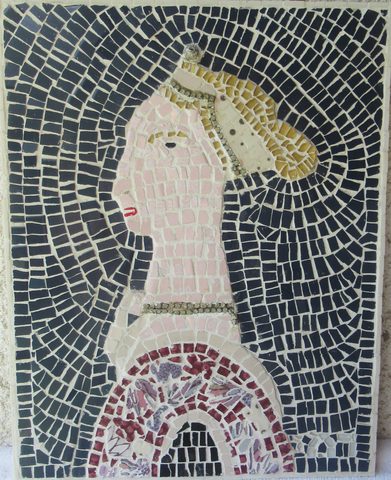
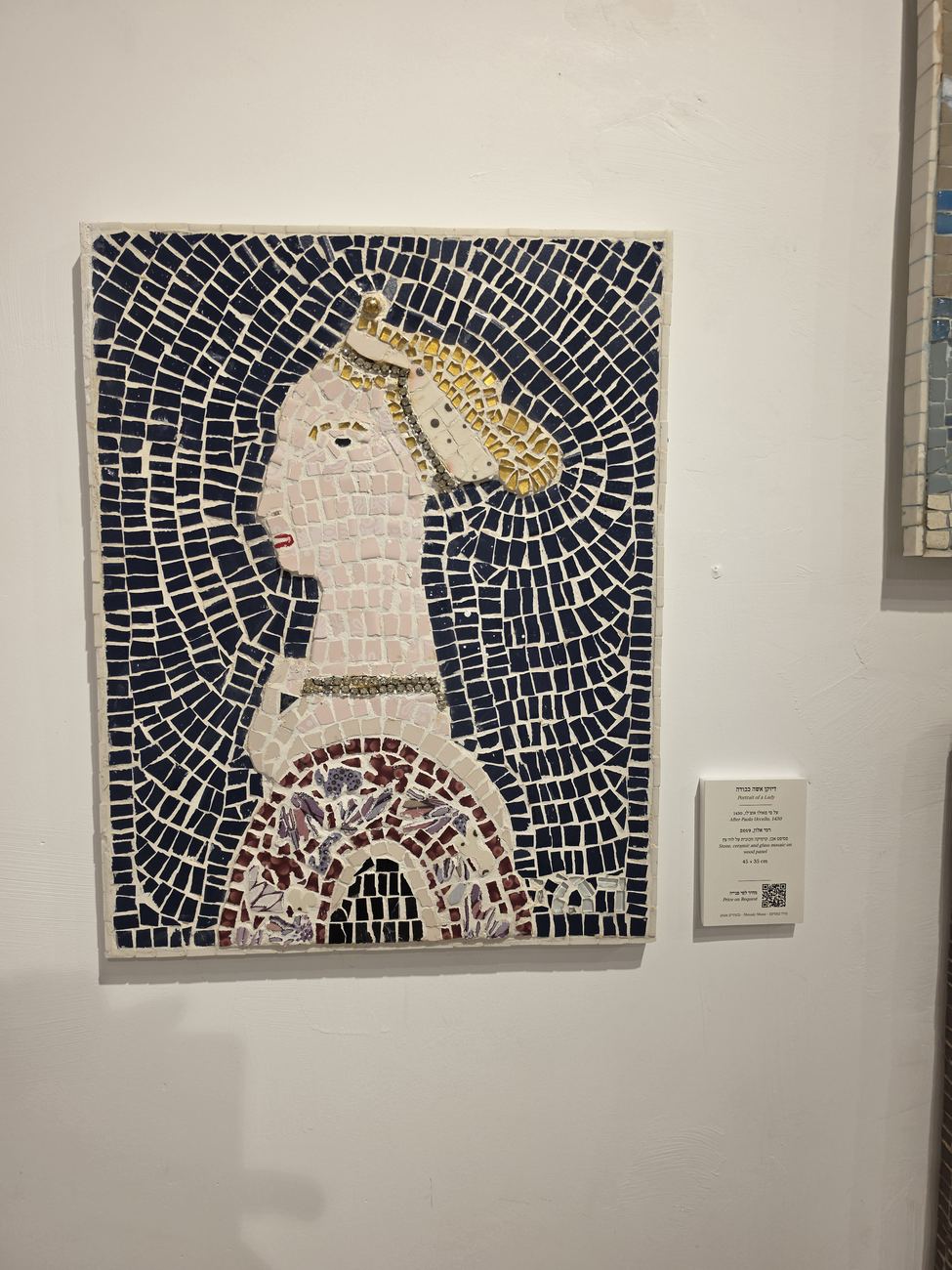
Portrait of a Lady

Portrait of a Lady

After Paolo Uccello · 2019
Price on Request
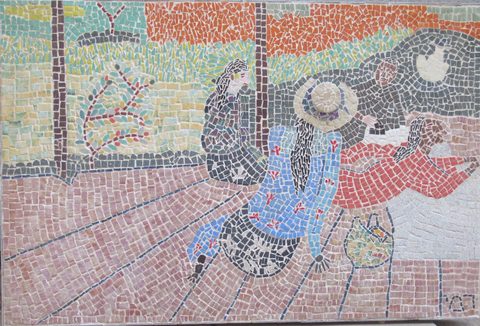
The Siesta

The Siesta

After Paul Gauguin · 2013
Price on Request
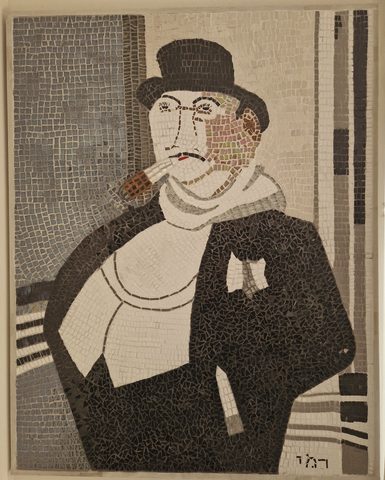
Kurt Garon

Kurt Garon

After Siegfried Shalom Sebba · 2024
Price on Request
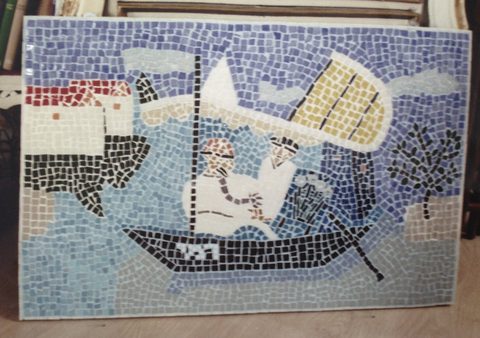
Monet on his Studio Boat

Monet on his Studio Boat

After Édouard Manet · 2010
Price on Request

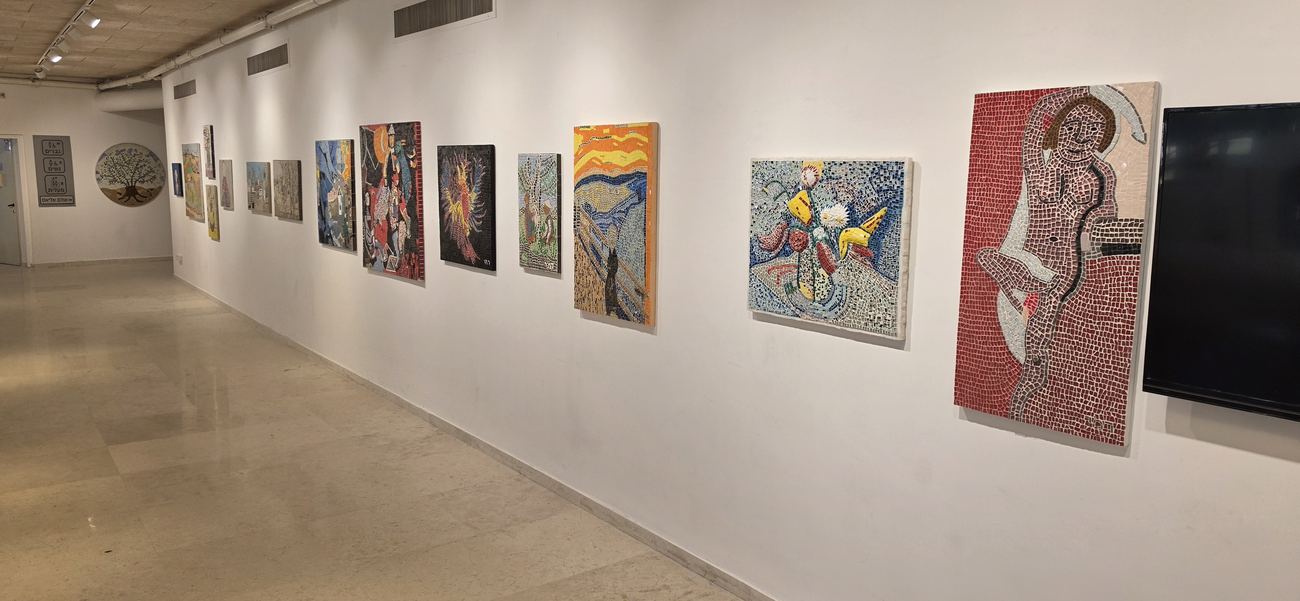
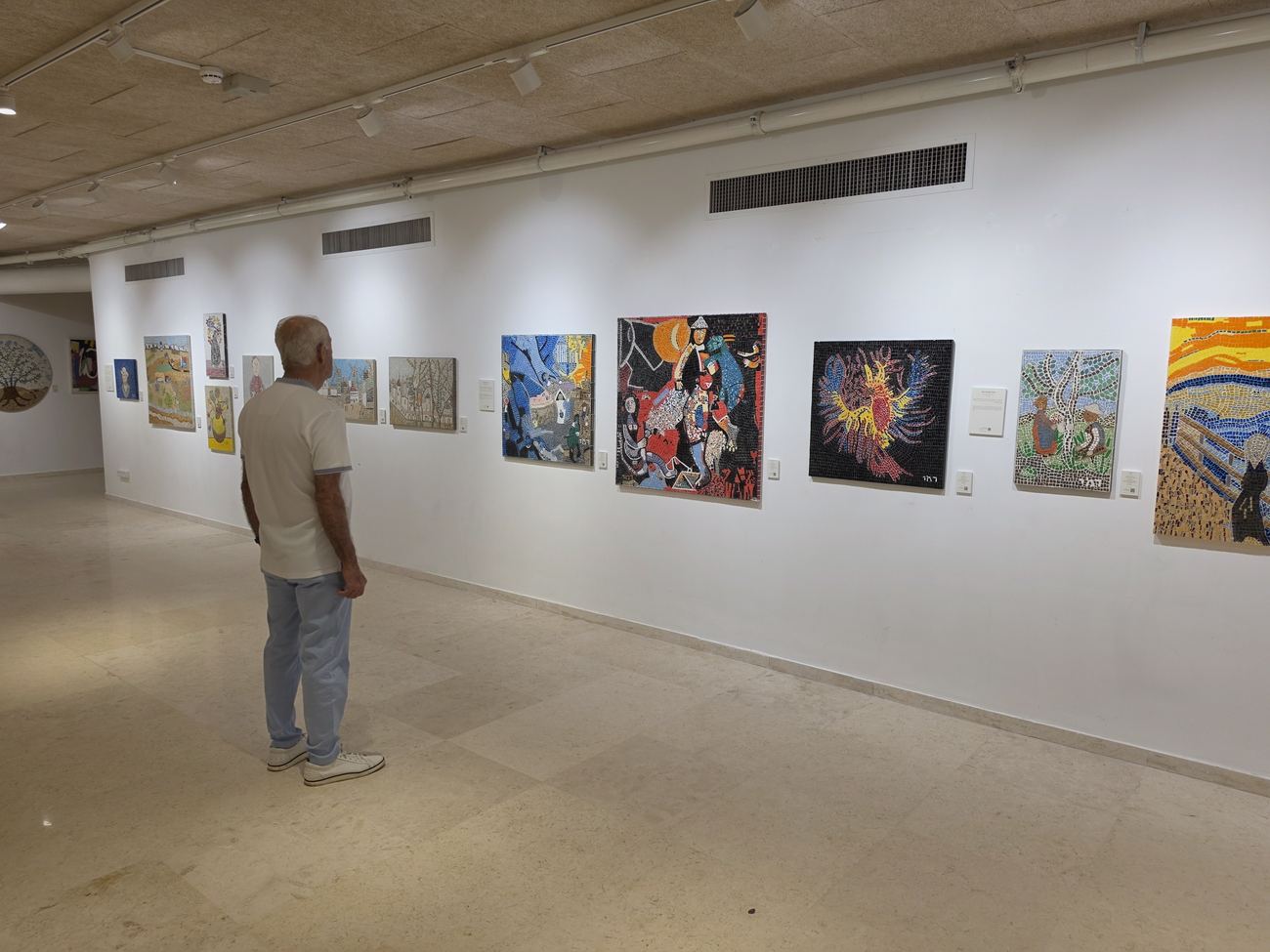
On the Wall

Each work hangs beside its own label, carrying a code that leads to its page on this site
Two sheep on the wall, the work’s label beside them
A portrait on blue, its label beside it
A work in black and white, its label beside it
The pumpkins up close, the olive trees beyond the glass wall behind them

Building the Exhibition

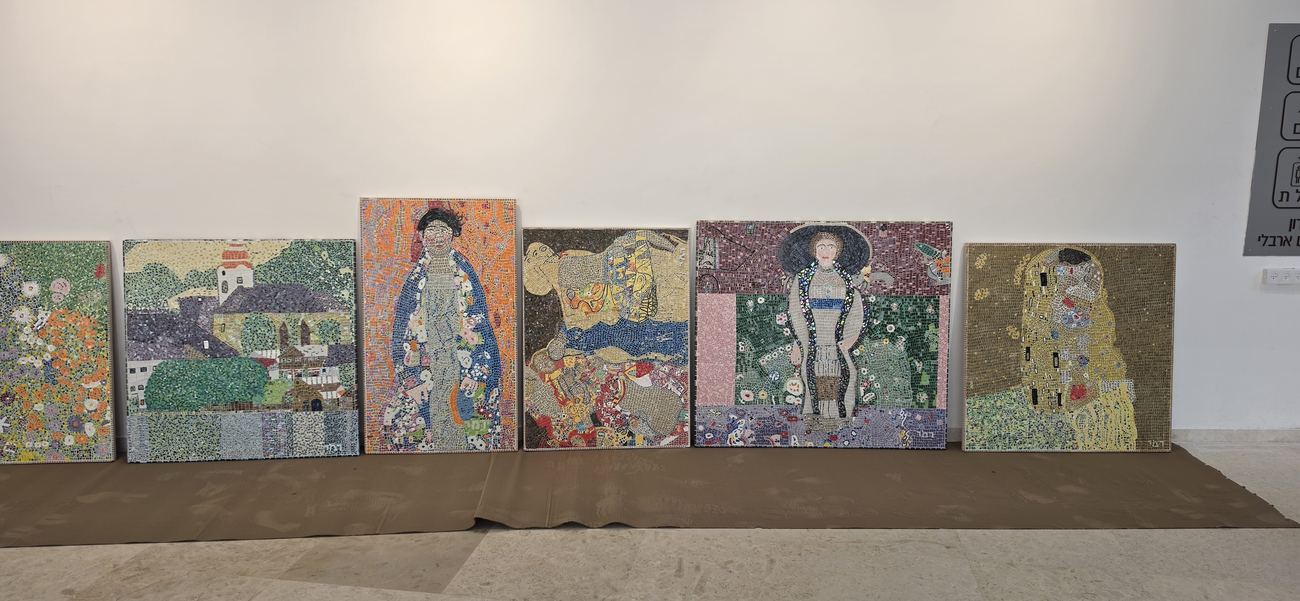
31 August 2026 — sixty works move from the walls of a home to the walls of a gallery
The works waiting on the floor, the morning of the hang
By the end of that day, on the wall
Three homages to Gustav Klimt on a white wall
Rami Alon before the hung wall